
The BAIR Blog shares research insights from UC Berkeley's AI lab on machine learning, deep learning, reinforcement learning, and more.
The BAIR Blog shares research insights from UC Berkeley's AI lab on machine learning, deep learning, reinforcement learning, and more.

OpenClaw is an AI focused on getting real work done, with updates on its agents for security, threat intelligence, and automation.

Gary Marcus's Substack offers clear-eyed takes on AI, from the promises and pitfalls of generative models to ethics and tech skepticism. As a longtime cognitive scientist, he's a steady voice pushing back on hype in a field full of it.

A running blog from Hugging Face with updates on open-source machine learning work, new AI models (often based on Transformers), and useful posts about training, fine-tuning, and neural network tooling.

Google Research's blog shares updates straight from their team on breakthroughs in AI, machine learning, NLP, and generative models. It's a solid window into the kind of innovative work that comes out of Google's labs.

A personal blog that gathers the latest posts from Simon Safar, mixing thoughts on AI alignment with philosophy, ethics, and plenty of sci‑fi fuel—often in a calm, reflective style.

Honeypot is a tech and programming blog that often connects AI with engineering topics, including lots of work around Apple ecosystems and robotics.

Microsoft Research is where the lab shares updates on experiments and papers across AI, machine learning, and newer topics like LLMs and multimodal models, with work that often shows up later in real products and tools.
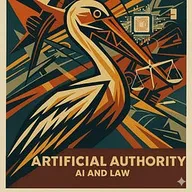
“The intersection of AI and the Law”
The latest in AI’s role in legal work and rule-making, where smart machines meet courtrooms and contracts.

Moncef Abboud's personal blog explores topics in AI, machine learning, and programming, often with a focus on open-source inference.

Analytics Vidhya is a long-running blog focused on learning AI, machine learning, and data science, with lots of practical tutorials and explainers—especially useful for topics like generative AI.

“A Newsletter on AI, business and society.”
Steampunk AI is a newsletter that covers artificial intelligence—like machine learning and frontier models—alongside business angles and societal shifts.

A no-frills newsletter since 2015, tracking the latest in AI research, business moves, and policy without the hype.

“Making the Inevitable Obvious”
Kevin Kelly's long-running blog explores the edges of technology and culture with a calm, curious eye, offering thoughtful essays and links that feel like the work of a friendly neighborhood futurist.

Pere Villega's blog covers practical topics like AI, coding, and cloud security, often with a focus on building agentic systems.

Futurism explores the intersection of artificial intelligence, technology, and society with a focus on how innovation is reshaping the future.

“Preserving the long-term future of life.”
The Future of Life Institute publishes research, statements, and policy commentary on AI safety, existential risks, and technologies that could affect humanity's future.

“LLM inference thoughts”
A blog by Fergus Finn on how he makes large language models run faster, with notes on AI hardware and software.

ARC Prize is a nonprofit pushing open-source AI research forward through benchmarks and competitions.

“AI for design and engineering news”
ENGtechnica covers AI developments and tools for design and engineering, including CAD, robotics, wearables, and data-center technology.

“Separating AI hype from reality.”
Epyhia covers developments in artificial intelligence, with reporting on AI products, infrastructure, policy, and industry claims.

Bear blog by AI researcher Andrej Karpathy covering major ideas and summaries around large language models, machine learning, and AI research.

“the latest news in ChatGPT + AI + DALL-E”
A running commentary on how generative AI is shaking up law, jobs, and copyright debates, with a skeptical eye on the companies pushing the tech.

Inside AI is a blog-style feed focused on AI news, research highlights, and what they mean for the industry and technology policy, making it useful for keeping up with both the tech and the debates around it.

Old-school nerds picking apart how distributed systems do what they say they will.